


-
 Shop Father's Day
Father’s Day Play Picks
Fun for Dad. Joy for the Kids.
- 15% off
Trybike
Trybike 2 in 1 Steel Balance Bike & Tricycle – Vintage Pink
Sale price $194.95 Regular price $229.95Unit price -
- 15% off
Trybike
Trybike 2 in 1 Steel Balance Bike & Tricycle – Vintage Green
Sale price $194.95 Regular price $229.95Unit price -
- 15% off
Trybike
Trybike 2 in 1 Steel Balance Bike & Tricycle – Vintage Grey
Sale price $194.95 Regular price $229.95Unit price -
- 15% off
Trybike
Trybike 2 in 1 Steel Balance Bike & Tricycle – Vintage Blue
Sale price $194.95 Regular price $229.95Unit price -
- 15% off
Trybike
Trybike 2 in 1 Steel Balance Bike & Tricycle – Vintage Black
Sale price $194.95 Regular price $229.95Unit price -
- 15% off
Trybike
Trybike 2 in 1 Steel Balance Bike & Tricycle – Vintage Red
Sale price $194.95 Regular price $229.95Unit price -
- 18% off
-
- 15% off
Trybike
Trybike 2 in 1 Steel Balance Bike & Tricycle – Vintage Cream
Sale price $194.95 Regular price $229.95Unit price -
- 13% off
Trybike
Trybike Handlebar Bag for Trike & Balance Bike
Sale price $34.95 Regular price $39.95Unit price -


Trybike 2-in-1 Trike & Balance Bike for Toddlers
Trybike is a two-stage ride-on that starts as a three-wheel trike for a wobbly 18-month-old and converts into a two-wheel balance bike once they're steady enough to steer on their own. One steel frame, two ways to ride, no second bike to buy later.
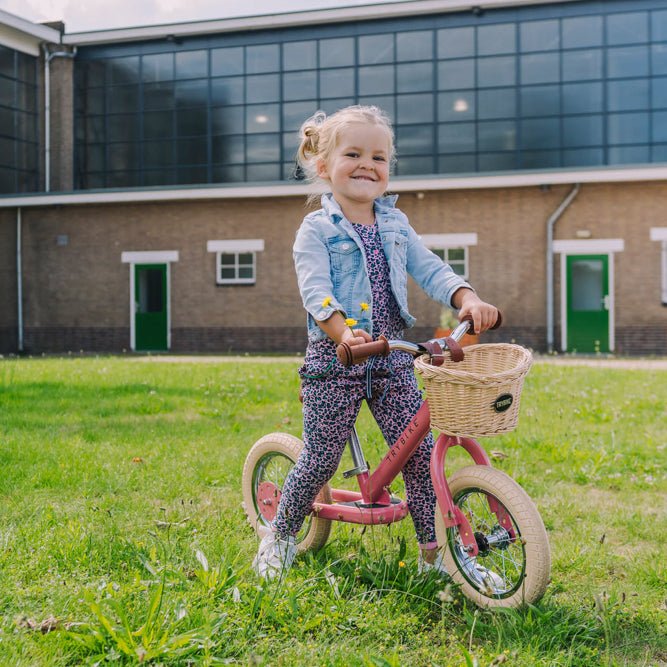
What is a Trybike? How the 2-in-1 conversion works
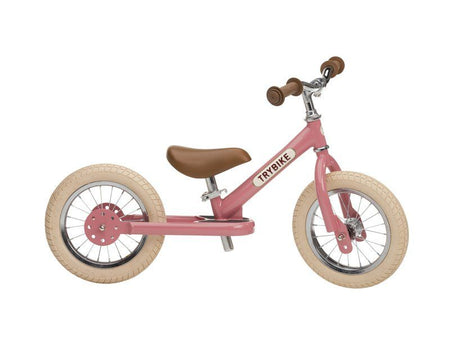
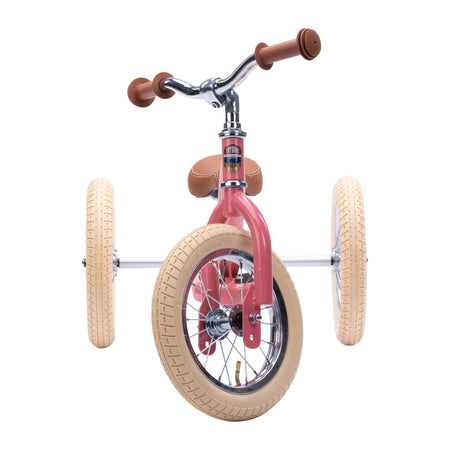
A Trybike is built around a single steel frame that changes shape as your child grows. Take off the pedals and the front steering bar, drop the seat, and the trike becomes a balance bike in about five minutes with no extra tools needed beyond what's in the box.
- Start in trike mode: three wheels, a parent-height push handle, pedals for feet that don't quite reach the ground yet.
- Remove the pedals and steering bar once your child starts pushing the trike along with their feet instead of pedalling.
- Lower the seat to balance-bike height and let them steer the front wheel directly.
- Ride as a two-wheel balance bike until they're ready for pedals again, this time on a proper bike.
Balance bike or tricycle: which should my toddler start on?
Trike mode (from around 18 months to 2.5 years). If your toddler is still finding their feet, literally, trike mode gives them three points of contact with the ground and a handle you can use to steer or push from behind. Most children start here between 18 months and 2 years, pedalling if they can, pushing along with their feet if they can't yet.
Balance bike mode (from around 2 to 6 years). Once your child is pushing the trike with their feet more than pedalling it, or starts kicking off the ground trying to go faster, that's your sign to convert it. Balance bikes teach steering and weight-shifting before pedalling enters the picture, which is why so many balance-bike graduates skip training wheels entirely when they move to a pedal bike. Browse our full range of balance bikes if you want to compare Trybike against other models we stock.
Trybike specifications at a glance
| Frame material | Steel |
|---|---|
| Wheels | Steel spoked wheels with pneumatic tyres |
| Bearings | Sealed cartridge ball bearings |
| Weight limit | 35kg |
| Seat height range | 30–45cm, adjustable |
| Age range | 18 months to 6 years |
| Colours | Vintage Pink, Green, Grey, Blue, Black, Red, Cream |
Finding the right seat height for your child
The seat adjusts from 30cm to 45cm, so the same bike fits a barely-walking 18-month-old and a confident 5-year-old without buying a bigger size later.
| Child's approximate height | Suggested seat height |
|---|---|
| 80–90cm | 30–33cm |
| 90–100cm | 34–38cm |
| 100–115cm | 39–45cm |
Measure your child standing barefoot, then set the seat so their feet sit flat on the ground with a slight bend in the knee. That's what lets them push off and stop safely in both trike and balance-bike mode.
Built to last: materials, sustainability and safety
Trybike is made from steel, certified wood and recycled board, with plastic kept to a minimum across the build. It's a heavier, sturdier construction than most first bikes on the market, which is also why it tends to get passed down to a younger sibling or resold in good condition rather than thrown out after one season. Every bike is tested to relevant safety standards before it reaches you, and we'd still recommend a helmet and closed-toe shoes for every ride. Browse our helmets and bike accessories if you need to kit your child out.
Trybike vs. other 2-in-1 trikes we stock: steel, wood or plastic?
Steel vs. wood: which frame material suits your family? We also stock the Kinderfeets Tiny Tot Plus, a 2-in-1 trike with a bamboo wood frame instead of steel. Wood is lighter and has a warmer look, which some parents prefer for indoor use or a smaller rider, but it carries a lower weight limit and a shorter usable age range than steel. Steel costs a little more up front and weighs more to carry, but it holds a heavier child for longer and is the more common choice for families planning to hand the bike down to a second or third child.
A third option: multi-stage plastic trikes. If you need something for a child younger than 18 months, the Globber Explorer 4-in-1 starts at 10 months, younger than Trybike covers. It's a plastic-frame trike that begins as a parent-steered stroller-trike with a canopy and 5-point harness, then works through three more stages before becoming a balance bike. It does a different job to Trybike: it suits the pram-replacement stage rather than acting as a direct alternative.
| Model | Material | Stages | Age range | Weight limit | Seat height | Price |
|---|---|---|---|---|---|---|
| Trybike 2-in-1 Steel | Steel | 2 (trike → balance bike) | 18 months–6 years | 35kg | 30–45cm | from $194.95 |
| Kinderfeets Tiny Tot Plus | Bamboo wood | 2 (trike → balance bike) | 18 months–4 years | 25kg | 25–34cm | $149.95 |
| Globber Explorer 4-in-1 | Plastic/TPR | 4 (infant → guided → training → balance bike) | 10 months–5 years | Not stated | 31–35cm | $269.95 |
How long does assembly take?
Budget 15 to 20 minutes with the tools included in the box. The trickiest part is usually the first trike-to-balance-bike conversion rather than the initial build, so it's worth reading through both sets of instructions before you start rather than only the assembly steps.
Is Trybike worth it? One bike vs. buying two
A separate trike and a separate balance bike usually cost more combined than one Trybike, and you're storing two bikes instead of one during the years your child only needs one at a time. The trade-off is timing: you're paying for both stages upfront rather than spreading the cost across a couple of years. For most families, that trade-off pays off if you know you'll use both stages, which is most children between 18 months and 6 years.
Suitable for every rider
Some children take longer to build the confidence or coordination to ride than others, and trike mode is there for exactly that: three wheels and a parent handle mean there's no pressure to balance before they're ready. There's no fixed timeline for switching to two wheels. Convert it when your child is ready, not before.
Shop the full Trybike range: colours and accessories
Trybike comes in seven vintage colours: Pink, Green, Grey, Blue, Black, Red and Cream, all built on the same steel frame and specs above. Once you've picked a colour, the matching Trybike basket and handlebar bag both clip on to either the trike or the balance bike, giving your child somewhere to keep whatever they want to bring along for the ride. For helmets and other protective gear, our full bike accessories range covers the rest of what you'll need before their first ride.


